Your Cat Isn't Just Picky - They're Biologically Programmed
Have you ever wondered why your cat completely ignores the vegetables in their bowl while going absolutely wild for the scent of meat? This isn't just being "spoiled" - it's a biological imperative. Cats are what scientists call obligate carnivores, meaning unlike dogs or humans, they simply cannot survive without animal proteins.
Recent scientific research has confirmed that feline metabolism is so specialized for a meat-based diet that they lack key enzymatic pathways needed to synthesize vital nutrients from plant sources. This makes them uniquely dependent on prey animals for survival.
What Makes Cats Such Extreme Carnivores?
Metabolic "Defects" That Are Actually Perfect Adaptations
Scientifically speaking, cats have several metabolic "limitations" that are actually brilliant evolutionary adaptations to an exclusively carnivorous lifestyle:
1. Cannot synthesize vitamin A from carotenoids While humans can convert orange carotene from carrots into vitamin A, cats have completely lost this ability. They must obtain pre-formed vitamin A directly from liver and other animal tissues.
2. Cannot produce sufficient taurine Taurine is an amino acid critical for heart function, vision, and reproduction. Cats cannot synthesize enough of it endogenously and must consume it from their diet. It's found almost exclusively in animal tissue.
3. Cannot convert linoleic acid to arachidonic acid Arachidonic acid is essential for healthy skin and coat. Plants contain only linoleic acid, which cats cannot efficiently convert - they need arachidonic acid directly from animal fats.
4. Limited ability to regulate certain enzymes Cats have high, constant activity of enzymes that break down protein, regardless of dietary protein intake - indicating their metabolism expects a consistently high-protein diet.
Why Did This Evolution Occur?
Cats evolved in environments where they had consistent access to small mammals, birds, and reptiles. Since their natural prey contained all necessary nutrients in ready-made form, the enzymatic machinery for synthesizing these compounds became "unnecessary" and was gradually lost through evolutionary time.
This specialization made cats incredibly efficient hunters and meat processors, but also made them entirely dependent on animal prey.
What Do Wild Cats Actually Eat?
Studies of feral and wild cat populations have revealed fascinating data about their natural diet composition:
Macronutrient Profile:
50-60% protein (dry matter basis)
35-45% fat
Only 1-5% carbohydrates
High moisture content (70-75%)
Primary Prey Items:
Small mammals (mice, rats, voles)
Birds
Reptiles and amphibians
Insects
Occasionally fish
Wild cats consume their prey entirely - including bones, organs, and often stomach contents - obtaining a complete nutritional profile that has shaped their metabolic requirements over millions of years.
Evidence-Based Feeding Guidelines for Your Cat
Selecting Appropriate Commercial Diets
Read ingredient lists carefully:
First ingredient should be a specific meat source (chicken, beef, salmon)
Avoid foods with high grain content as primary ingredients
Verify taurine content (minimum 0.1% dry matter)
Look for AAFCO certification or equivalent nutritional adequacy statements
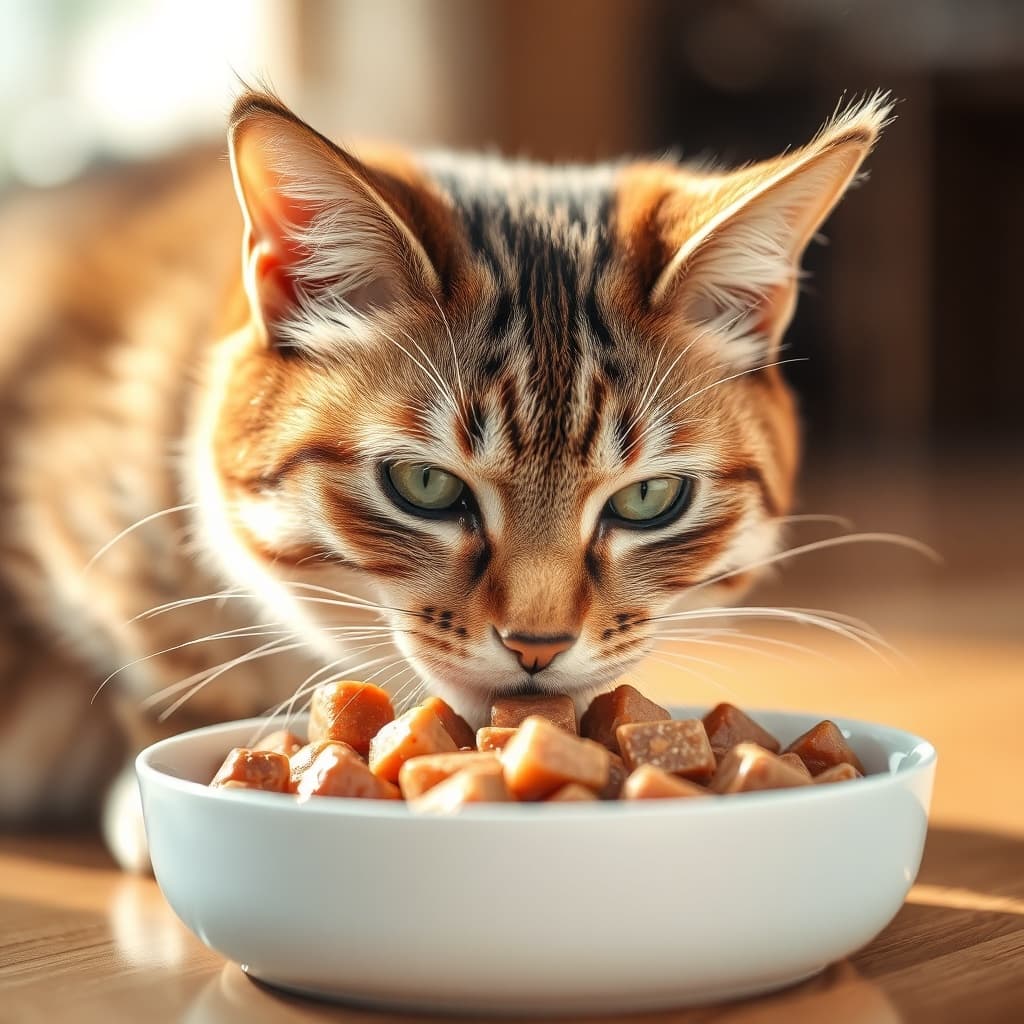
Wet vs. Dry Food Considerations: Canned/wet foods more closely approximate the moisture content of natural prey. If feeding primarily dry food, ensure abundant fresh water access, though cats may still not drink sufficiently to meet optimal hydration needs.
Foods to Absolutely Avoid
Vegan or vegetarian cat foods - can cause severe nutritional deficiencies
Raw meat without veterinary consultation and proper supplementation
Garlic and onions (toxic to cats)
Chocolate and caffeine
Alcohol
High-carbohydrate "filler" foods
Monitoring Nutritional Success
Key indicators of proper nutrition:
Glossy, full coat
Clear, bright eyes
Stable, appropriate body weight
Regular, normal elimination
Active, engaged behavior
Good muscle tone
The Psychology and Behavior of Feeding
Research has demonstrated that feeding methods impact not just physical health, but also mental and behavioral well-being in cats.
Environmental Enrichment Through Feeding
Puzzle feeders and food toys:
Stimulate natural hunting instincts
Slow eating pace (beneficial for digestion)
Provide mental stimulation and reduce boredom
Can help prevent obesity
Feeding frequency:
Wild cats eat 10-20 small meals daily
Domestic cats benefit from 4-6 smaller meals rather than 1-2 large ones
Mimics natural feeding patterns
Multi-Cat Household Considerations
Resource management:
Each cat should have individual feeding stations
Separate competitive eaters during meals
Monitor to ensure all cats are eating adequately
Consider different dietary needs based on age/health status
Debunking Common Myths
Myth: "I can raise my cat as a vegetarian if I supplement properly." Reality: No amount of supplementation can replace the complex nutritional matrix found in animal tissues that cats have evolved to require.
Myth: "Dry food alone provides complete nutrition." Reality: While quality dry foods can be nutritionally complete, they don't provide the moisture content cats naturally require and may contribute to chronic dehydration.
Myth: "Cats need milk." Reality: Most adult cats are lactose intolerant, and milk is not a natural part of their diet past weaning.
Myth: "A little bit of plant matter won't hurt." Reality: While small amounts aren't harmful, cats derive virtually no nutritional benefit from plant ingredients and they displace more appropriate animal-based nutrients.
Addressing Common Feeding Challenges
Finicky Eating
Gradually introduce new flavors rather than new brands
Warm canned food to room temperature to enhance aroma
Ensure food freshness - cats are sensitive to rancidity
Rule out dental pain or other medical issues
Obesity Management
Consult veterinarians for appropriate caloric targets
Increase activity through interactive play
Use measured portions rather than free-feeding
Consider prescription weight management diets
Food Begging Behaviors
Maintain consistent feeding schedules
Don't reinforce begging with food rewards
Provide adequate mental stimulation to reduce food-seeking behavior
Ensure the cat is receiving adequate nutrition at meal times
The Bottom Line: Respecting Feline Biology
Understanding that your cat is an obligate carnivore isn't just an interesting biological fact - it's fundamental to providing optimal care. Their entire physiology, from their teeth to their digestive enzymes to their metabolic pathways, has been shaped by millions of years of evolutionary pressure as specialized predators.
Attempting to work against this fundamental biology doesn't just risk nutritional deficiencies - it ignores the very essence of what makes cats the remarkable creatures they are.
Investment in biologically appropriate nutrition pays dividends in longer lifespan, better health outcomes, improved behavior, and enhanced quality of life for your feline companion.
By respecting and working with your cat's carnivorous nature rather than against it, you're providing them with the foundation for a thriving, healthy life.
Scientific References: This article is based on peer-reviewed research published in Annual Review of Nutrition and other scientific studies available in the PubMed database.
Primary Reference: MacDonald ML, Rogers QR, Morris JG. Nutrition of the domestic cat, a mammalian carnivore. Annual Review of Nutrition. 1984;4:521-562. PubMed: https://pubmed.ncbi.nlm.nih.gov/6380542/