Your Cat's "Crazy" Hours Are Actually Perfectly Normal
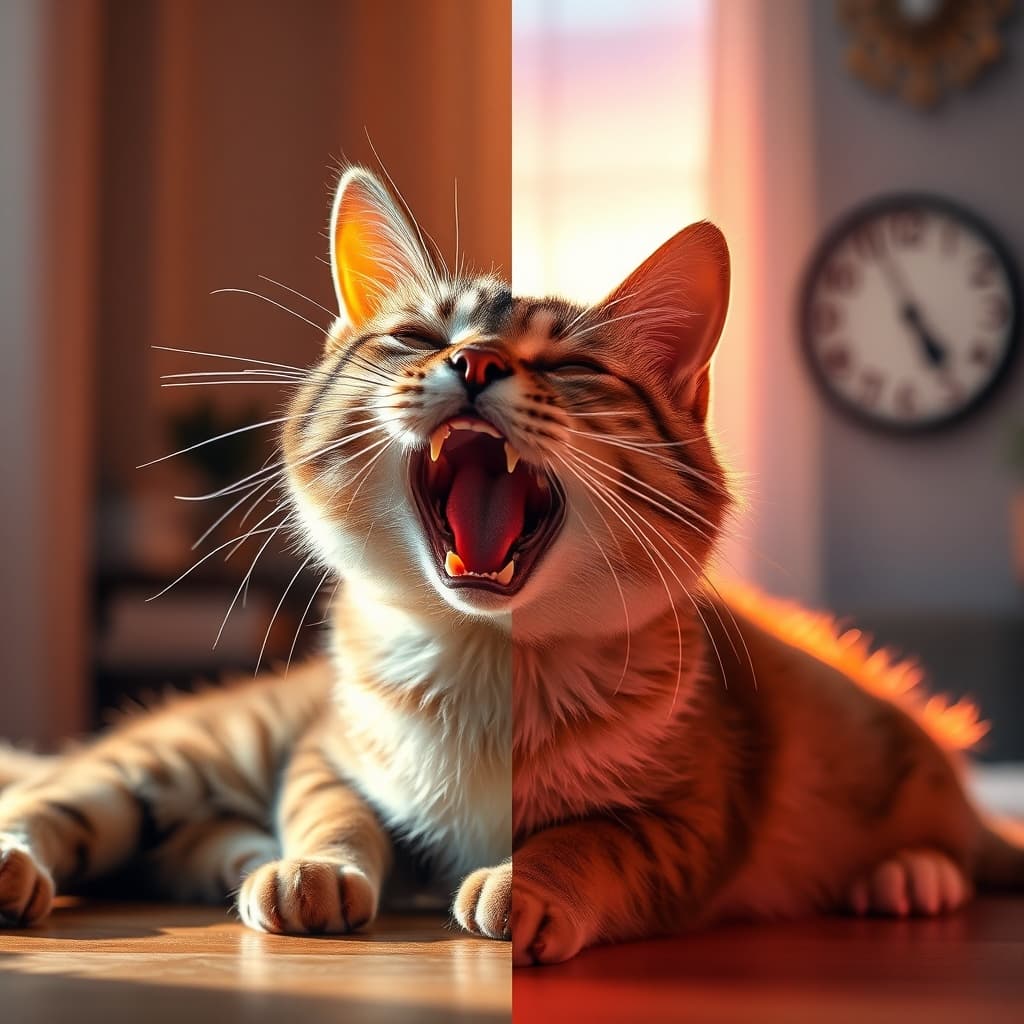
If you've ever wondered why your cat transforms into a furry tornado right when you're trying to get ready for work in the morning, or why they suddenly become hyperactive just as you're settling down for a peaceful evening, you're witnessing something truly remarkable: the crepuscular rhythm.
Crepuscular animals are those most active during twilight hours - dawn and dusk. Your domestic cat, despite living in the comfort of your home, still carries this ancient biological programming from their wild ancestors. This isn't random behavior or attention-seeking; it's millions of years of evolution in action.
The Science Behind Feline Daily Rhythms
Groundbreaking research published in the Journal of Veterinary Medical Science has provided us with concrete evidence of cats' natural activity patterns. Scientists used telemetry systems to monitor cats' blood pressure continuously throughout 24-hour periods, creating a detailed picture of their physiological rhythms.
The results were striking: cats showed two distinct peaks in blood pressure and activity at 8:00 AM and 7:00 PM. This wasn't just behavioral observation - this was measurable physiological evidence that cats' entire cardiovascular system revs up twice daily, perfectly aligned with crepuscular timing.
Why Dawn and Dusk Matter
In the wild, these twilight periods offer optimal hunting conditions. The light isn't too bright or too dim, giving cats a significant advantage over their prey. Their exceptional night vision allows them to see clearly when many prey animals struggle, while there's still enough ambient light to detect movement and judge distances accurately.
Your house cat has retained this programming despite no longer needing to hunt for survival. It's like having an internal alarm clock that can't be reset - and honestly, why would we want to change something so perfectly designed by nature?
How Crepuscular Rhythm Manifests in Your Home
Understanding this rhythm explains so many of your cat's daily behaviors:
Morning Madness (6 AM - 10 AM)
Zoomies through the house: Your cat may race from room to room at breakneck speed
Vocal demands: Increased meowing, purring, or chattering, especially around feeding time
Heightened alertness: Your cat becomes incredibly responsive to sounds and movement
Playful aggression: They might pounce on your feet or "hunt" household objects
Evening Energy Surge (6 PM - 10 PM)
Interactive play seeking: Your cat actively solicits games and attention
Increased appetite: Many cats show renewed interest in food during evening hours
Social behavior: Multi-cat households often see increased social interaction during this time
Exploration: Indoor cats may spend time at windows, watching the outside world
Midday Calm
Between these peaks, cats enter their famous rest periods. This isn't laziness - it's energy conservation, just like their wild counterparts who rest during less optimal hunting times.
Working With Your Cat's Natural Schedule
For Early Risers:
Schedule morning play sessions before work to tire out your cat productively
Time the main meal to coincide with your cat's natural morning appetite peak
Create morning rituals that satisfy your cat's need for interaction without overwhelming your schedule
Use puzzle feeders in the morning to engage their hunting instincts constructively
For Evening People:
Plan longer play sessions when you get home from work - your cat will be naturally ready
Use evening time for training - cats are more mentally engaged during activity peaks
Establish bedtime routines that help transition from evening activity to nighttime rest
Consider interactive toys that can provide stimulation during your cat's active periods
Managing the In-Between Hours:
Respect rest time: Don't force interaction during your cat's natural quiet periods
Provide comfortable sleeping spots in quiet areas for daytime naps
Use automatic feeders or puzzle toys to provide stimulation if you're away during active periods
Practical Solutions for Common Crepuscular Challenges
The 5 AM Wake-Up Call
If your cat's morning peak disrupts your sleep:
Tire them out thoroughly during their evening peak the night before
Use blackout curtains to delay light-triggered activity
Ignore attention-seeking behavior - responding reinforces the pattern
Provide solo activities like puzzle feeders that don't require your participation
Evening Hyperactivity
When evening energy interferes with relaxation:
Schedule dedicated play time before you want to wind down
Rotate toys regularly to maintain interest and engagement
Create vertical spaces for climbing and exploration
Consider a companion cat if appropriate - they can engage each other
Multi-Cat Households
Crepuscular periods can intensify in homes with multiple cats:
Provide multiple resources (food stations, toys, perches) to prevent competition
Monitor interactions - some cats become overstimulated during peak activity
Create separate spaces if cats need breaks from social interaction
When Crepuscular Patterns Change
While crepuscular rhythm is natural, significant changes can indicate:
Age-Related Shifts
Senior cats may show less pronounced activity peaks
Kittens might have more frequent, less predictable active periods
Adult cats typically show the most consistent crepuscular patterns
Health Considerations
Sudden increases in activity could indicate hyperthyroidism or other conditions
Dramatic decreases might signal illness, pain, or depression
Disrupted sleep patterns could indicate cognitive changes in older cats
Environmental Factors
Seasonal changes affect indoor lighting and can shift activity timing slightly
Household routine changes may temporarily disrupt established patterns
New pets or people can alter your cat's comfort with expressing natural behaviors
Embracing Your Cat's Natural Design
Understanding and working with your cat's crepuscular rhythm isn't just about managing behavior - it's about honoring their evolutionary heritage. When you align your expectations and routines with these natural patterns, you'll likely find:
Reduced behavioral problems as your cat's needs are met appropriately
Stronger bonding through properly timed interactions
Better sleep for both you and your cat
Enhanced wellbeing for your feline friend
The next time your cat goes into "crazy mode" at dawn or dusk, remember: you're witnessing millions of years of perfect evolutionary design. These aren't inconvenient quirks - they're glimpses into the wild heart that beats within every domestic cat.
By respecting and working with these natural rhythms rather than fighting them, you create a home environment that truly supports your cat's physical and psychological wellbeing. And isn't that what every cat parent wants?
Reference: Mishina, M., Watanabe, N., & Watanabe, T. (2006). Diurnal Variations of Blood Pressure in Cats. Journal of Veterinary Medical Science. PubMed: https://pubmed.ncbi.nlm.nih.gov/16598167/