The Pointing Puzzle: Why Your Cat Seems to Ignore You
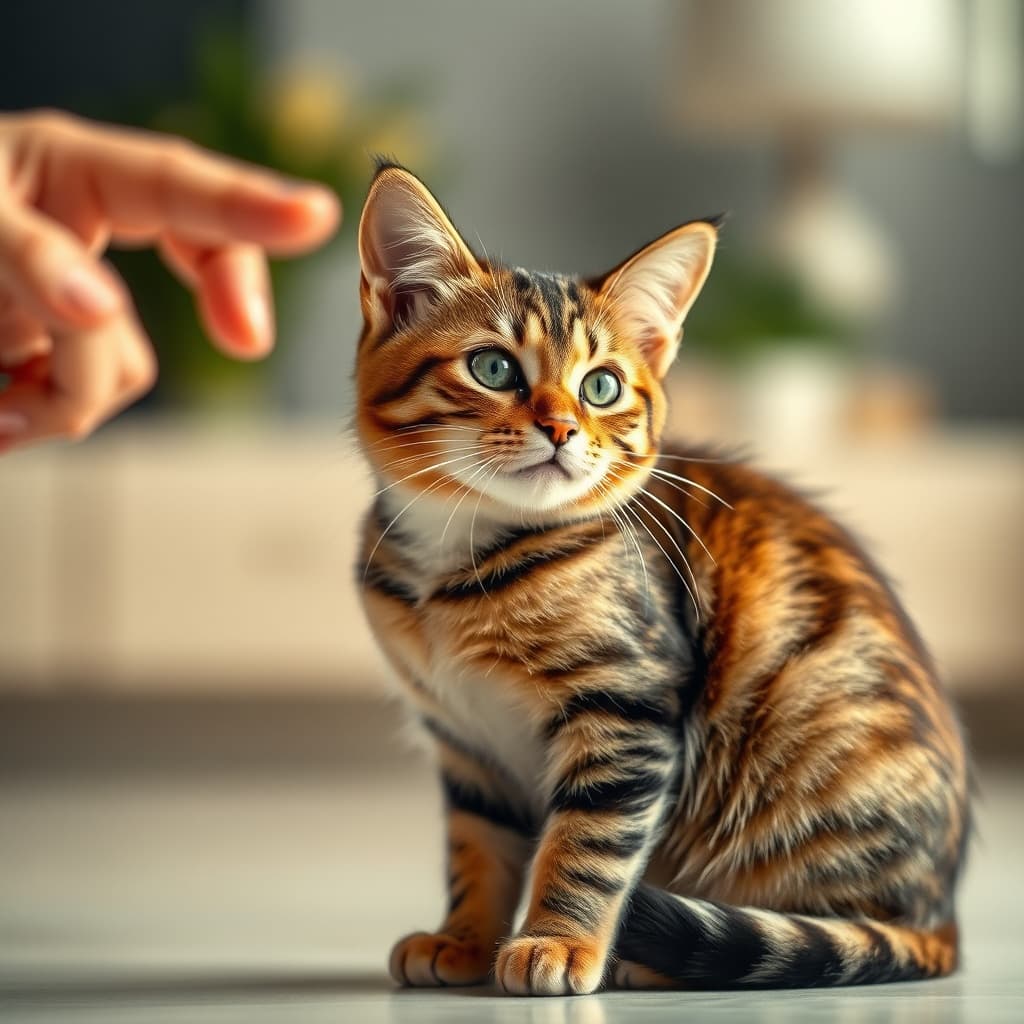
Have you ever pointed at something to show your cat, only to watch them look everywhere except where you're pointing? While you might think your feline friend is just being stubborn or aloof, science reveals a much more fascinating truth about how cats process human communication.
A groundbreaking comparative study published in Scientific Reports has uncovered significant differences in how cats and dogs respond to human pointing gestures. The findings challenge our assumptions about feline intelligence and reveal the unique ways cats have evolved to interact with humans.
What the Research Reveals About Feline Communication
Researchers conducted a direct comparison between companion dogs and cats using an object-choice task with human distal pointing gestures. The results were striking: dogs significantly outperformed cats in both their willingness to participate in tests and their success in following human pointing cues.
The study found that cats made considerably fewer choices than dogs in laboratory settings, showing a fundamentally different approach to human-directed communication. But before you conclude that cats are less intelligent, consider the evolutionary context.
The Evolutionary Background
These differences aren't random – they're rooted in distinct domestication histories:
Dogs were domesticated 15,000-40,000 years ago specifically for cooperation with humans
Cats underwent domestication around 9,000 years ago, primarily for pest control
Dogs evolved heightened sensitivity to human communicative signals
Cats retained greater independence and self-reliance
As the researchers explain, these differences stem from contrasting "domestication, social and ecological backgrounds, and developmental processes."
How Cats Actually Communicate with Humans
While cats might not excel at following pointing gestures, research on social interactions between cats and their owners reveals they have sophisticated alternative communication strategies:
Vocal Communication
Cats have developed meowing specifically for human interaction – adult cats rarely meow at each other, reserving this vocalization primarily for communicating with people.
Physical Interaction
Head butting and rubbing against humans
Strategic positioning and body language
Purring as a social bonding mechanism
Attention-Seeking Behaviors
Studies show cats are remarkably skilled at initiating interactions with humans, often controlling the timing and nature of social exchanges.
The Science Behind Feline Social Cognition
Recent studies on ostensive communication in cats reveal an "unexpected pattern of response" to human cues. Unlike dogs, who show predictable error patterns in learning tasks, cats demonstrate:
Independent decision-making rather than blind following of human cues
Selective attention to human signals based on context
Self-directed problem-solving approaches
This doesn't indicate cognitive limitations – rather, it reflects a different evolutionary strategy for human-animal interaction.
Practical Tips for Better Cat Communication
1. Adapt Your Communication Style
Use vocal cues instead of relying solely on pointing
Employ a higher-pitched, gentle tone when calling your cat
Be patient – cats process and respond to information differently
2. Respect Feline Independence
Avoid forcing interactions or expecting dog-like obedience
Allow cats to approach on their own terms
Recognize that cats show affection through choice, not compliance
3. Learn to Read Cat Signals
Pay attention to body language and vocalizations
Notice subtle cues like ear positioning, tail movements, and purring patterns
Respect personal space boundaries
4. Training Approaches for Cats
Use positive reinforcement with high-value treats
Keep training sessions short and sweet (2-3 minutes)
Focus on behaviors that align with natural cat instincts
Understanding the Human-Cat Bond
Research suggests that the quality of human-cat interactions is influenced by factors including:
Cat personality traits and individual temperament
Owner communication style and expectations
Environmental context and stress levels
The study of cat allergen production (Fel d 1) has even revealed connections between cat personality, human interaction styles, and physiological responses, highlighting the complex nature of the human-cat relationship.
Implications for Cat Owners
These scientific insights suggest that cats aren't defective dogs – they're unique animals with their own communication system. When your cat doesn't respond to pointing:
It's not personal – they're not ignoring you out of spite
They're not less intelligent – they're using different cognitive strategies
They may be communicating in ways you haven't learned to recognize
Building Stronger Bonds
Understanding these differences can actually strengthen your relationship with your cat by:
Reducing frustration and unrealistic expectations
Appreciating your cat's unique communication style
Developing more effective interaction strategies
The Bottom Line: Embrace the Difference
Cats' apparent "failure" to respond to pointing gestures isn't a limitation – it's a feature of their evolutionary design. While dogs developed as cooperative partners attuned to human direction, cats evolved as independent allies who choose when and how to interact.
This research reminds us that effective interspecies communication requires understanding and adapting to each species' natural tendencies rather than imposing one-size-fits-all expectations.
By appreciating cats for who they are – intelligent, independent, and selectively social – we can build more rewarding relationships that respect their unique nature while still enjoying meaningful companionship.
This article is based on the scientific study "Dogs outperform cats both in their testability and relying on human pointing gestures: a comparative study" published in Scientific Reports (2023). Full research details available on [PubMed](https://pubmed.ncbi.nlm.nih.gov/37857683/).